Friday, March 02, 2007

How To Repair Dell E173fpb LCD Monitor Easily

Troubleshooting DELL E173FPB LCD Monitor with power blink symptom is quite easy if you know the right procedure to test it. There are two sections in the monitor that can cause power to blink. It is either primary or secondary section or even sometimes both sections can be faulty. So to isolate as which section is giving problem. I used an automobile 12 volt light bulb (brake light) and connect it between the 12 volt supply line and cold ground with the fuse removed. If the bulb still blink chances is very high the power primary section have problem.

Do not overlook the other voltages line as well such as the 3.3 and 5 volts. If any components shorted that gets the supply from the 5 and 3.3 volts, the power also may blink. If the 12 volts bulb lights up we can assume that the power supply is working fine and something shorted further down the line that makes the power supply to blink. If the bulb lights and you continue to check the power section, it will be going to waste your time. You should now concentrate on the secondary section circuit such as the four transistors C5707 that drive the high voltage transformer in the inverter board.

Just think these transistors like horizontal output transistor (HOT) in the CRT monitor that drive the flyback transformer where it worked so hard and chances for it to breakdown is very high. Checking the four transistors off board found one of them have a shorted reading with an ohmmeter.. This transistor can get faulty by itself or it could be some others components that caused it to develop a short circuit such as a defective high voltage transformer but all of the four high voltage transformers checked to be okay with ringer and ohmmeter test.

Now, here is the secret that I'm going to reveal. If you just replace the defective transistor only, chances is very high the transistor or another C5707 transistor will breakdown again. Usually what a technician does is to test the other transistors with either an analog or digital meter. If you use both meters to test the transistors then you have missed out on the faulty transistor because both meters won't reveal to you the hfe reading of the transistors. Only some digital meters have the hfe checking feature. In other words, you have to use test the hfe reading of a transistor. Although you can replace the other three transistors directly, why not we do some detective work to find the cause of the problem?

Using the Peak electronic atlas component analyzer, I could clearly see the different between a good and a bad transistor. A good C5707 transistor has hfe reading from 320 to about 390 but the bad one reads 467! The other two C5707 transistors have reading about 350. In the above case only two C5707 transistors were replaced and you save the other two. I had burn in test this LCD monitor for many days and it worked perfectly fine.

Conclusion- Whether you repair the DELL E173FPB LCD Monitor or any other model such as the E172FPB or E171FPB, basically the testing method is the same. You could also use this testing procedure on other brand of LCD Monitor too.

Wednesday, February 28, 2007

Current Internet Network Security Policies Are Nonsense!


Internet network security policies are flawed in strategy and implementation.

Gary suggests that the use of external consultants for the entire internet network security policy framework is not a great idea since the external consultants will find it difficult to grasp the intricacies and business drivers for the network security decisions.

Also, in terms of implementation, the internet network security policy should be disseminated to each and every employee of the company through seminars , handouts and quizzes rather than an innocuous email that no one reads.

The network security policy should capture the latest trends in the network security industry rather than playing catch up. One of the network security aspects
that Internet network security policy makers should be worried about now is access to corporate data through a Blackberry or a mobile phone.

New ways of accessing internet cause internet security policy nightmares for CIOs. For example, most companies allow employees to access the corporate intranet mails thru Blackberrys. Also, some companies allow VPN access to the entire corporate intranet. All this is usually actually in violation of the existing corporate internet security policy which has to be rewritten.

In conclusion, internet network security policy implementors should focus on internal buy in among employees and proper dissemination to the entire IT work force,including contractors.This will ensure that the internet network security policy doesnt end up as a useless binder in your boss's cabin!

Monday, February 26, 2007

When Will a Universal Hand-Held Internet Connected Device Handle All World Languages?


Universal Language translators have been discussed and dreamed about for a hundred years now; machines that might know every world language; Imagine that? When will a Universal Hand-Held Internet Connected Device be readily available to handle all World Languages?

The Online Think Tank recently considered this question and one member stated; "This is an easy one because on Page 5 of SpeechTech Magazine in the October 2006 issue was an advertisement for "SpeechGear, Inc." which has the capacity to instantly translate language anytime and anywhere onto Windows XP Tablet PC Edition."

Look up "Endurance TabletPC" and "Compradre" with SpeechGear. SpeechGear in their previous white papers explains their system is speech-to-speech language translation. Also, remember this was being talked about at TED Conference Last Year.

We can expect all this technology to miniaturized within the year and readily available to market in 2-years and it will be a hot seller, I think the smart VCs are already all over it. And In-Q-Tel and DARPA are seeing these technologies worthy for the challenges in Iraq. Apparently, a prototype of this is in use by troops in IRAQ now presently and some police departments and Border Patrol Agents as well.

Imagine the benefits to business dealings and uniting culture and peoples of the world? I certainly hope this article is of interest and that is has propelled thought. The goal is simple; to help you in your quest to be the best in 2007. I thank you for reading my many articles on diverse subjects, which interest you.

Saturday, February 24, 2007

Money Saving Tips For Buying Ink Cartridges


Printer ink is one of the most expensive things you'll have to buy for your computer on an ongoing basis, but fortunately there are ways to save both time and money.

The best choice for buying ink cartridges is to do so on the internet. This obviously save time compared to having to drive to your local computer or office supply store, but it's also often less expensive. You place your order online and they'll be delivered directly to your home or office.

Online ink suppliers offer considerable discounts on their cartridges. And if you buy in bulk you can often save even more money. They often have better selections than the average "brick & mortar" store as well.

Another way to save money on your printer ink is to buy refill kits or recycled cartridges. Most ink cartridges can be refilled at least once, and the cost is often less than half that of a new one.

You do need to be careful with refilled ink cartridges, however. They have been known to not work as well as the originals and in rare cases can even damage your printer. Make sure the company you buy them from offers a good guarantee.

If you're going to buy ink in bulk quantities, make sure you know how quickly you can use it. Ink cartridges do have a shelf life and there's no sense buying two years worth of ink if they expire in one. Check with the ink supplier to find out when the cartridge expire.

To find out how much ink you use, you'll probably need to monitor how often you replace your ink for a few weeks, or months if you don't use it very quickly. Don't buy bulk quantities until you know for sure you can use it all.

Wednesday, February 21, 2007

Rolling Business Overnighter, Black

List Price:$25.99
You Save: $19
Final Price:$6.99
Description :
The tool, a most comprehensive multipurpose folding tool chest. This tool array offers the unique combination of versatility, one hand opening, and many features.


Grab more HOT Deals at StealZone.com

Sunday, February 18, 2007

Rival BB200 Black/ Stainless Steel Crockpot BBQ Pit

List Price:$149.99
You Save: $94.2
Final Price:$55.79
Description :
Take BBQ to a whole new levelBlack and stainless steel finish accents any kitchenGlazed stoneware is great for slow cooking and offers easy serving and cleaningSpecial heating chamberTwo-position rack designed to hold, roasts, ribs, and more.


Grab more HOT Deals at StealZone.com

Wednesday, February 14, 2007

Canon PIXMA MP600 Multifunction Printer - Color Inkjet - 24 ppm Color - 9600 x 2400 dpi - Copier, Printer, Scanner -1451B002

List Price:$199.99
You Save: $50
Final Price:$149.99
Description :
Outstanding All-In-One Photo Printer with 2.5" TFT Display and Easy-Scroll Wheel. Now, this is multi-tasking. With one machine, you can quickly print beautiful, long-lasting photos and laser-quality text. Copy important documents using the included Dual Color Gamut Processing Technology (DCGPT) for results that are faithful to your originals. And scan photos, forms, and important documents with outstanding results. You can even print directly from compatible memory cards.


Grab more HOT Deals at StealZone.com

Monday, February 12, 2007

Edge 100GB DiskGo 2.5 USB Backup Ultra Portable Hard Drive -EDGDG-206604-PE

List Price:$107.99
You Save: $30
Final Price:$77.99
Description :
The DiskGO 2.5 Backup Ultra Portable Hard Drive is the perfect portable storage solution for backing up and storing videos, photos, songs, graphics and more. With transfer rates up to 480Mbs, this device can backup your entire desktop or laptop in just minutes with one simple push of the backup button located on the drives front panel. Its that easy! The DiskGO 2.5 Backup Ultra Portable Hard Drive utilizes the power of Backup4all software to provide a powerful and reliable backup solution.


Grab more HOT Deals at StealZone.com

Friday, February 09, 2007

Casio Exilim EX-Z70 7.2MP Digital Camera with 3x Anti Shake Optical Zoom (Black)

List Price:$249.99
You Save: $66.03
Final Price:$183.96
Description :
The simple to use yet stylish Exilim EX-Z70BK Digital Camera from Casio offers an excellent solution for photography enthusiasts. The ultra high resolution 7.2 million pixels CCD in the EXILIM EX-Z70BK delivers an impressive 7.2 million pixels of full color brilliance and sharpness. A full 2.5-inch large and glass-clear TFT color display gives you a clear view of every motif. How to get this deal:


Grab more HOT Deals at StealZone.com

Wednesday, February 07, 2007

Sony Handycam DCR-HC36 MiniDV Digital Camcorder

List Price:$349.99
You Save: $56.11
Final Price:$293.88
Description :
Sonys DCR-HC36 MiniDV Handycam camcorder stands out with high-end digital imaging features at an affordable price. Super NightShot infrared system enables you to capture natural looking video in low light conditions.


Grab more HOT Deals at StealZone.com

Monday, February 05, 2007

D-Link 7DBI Omni-Directional Indoor Antenna 802.11 B/G Base - ANT24-0700

List Price:$49.99
You Save: $36
Final Price:$13.99
Description :
D-Link, an industry leader in networking, introduces the ANT24-0700 Omni-Directional 7dBi Indoor Antenna designed to provide extended coverage for an existing 802.11b/g wireless network. The omni-directional design of the ANT24-0700 offers dramatically increased wireless signal coverage in all directions. With 360 of better signal reception, this high-gain antenna will also improve data throughput at further distances.


Grab more HOT Deals at StealZone.com

Friday, February 02, 2007

A-DATA 1GB Micro SD Card with SD Adapter

List Price:$19.99
You Save: $6.04
Final Price:$13.95
Description :
A-DATA's microSD memory card uses SLC Flash memory to provide a higher data transmission speed, making it ideally suited for high-definition audiovisual display. With 3G (Third Generation Mobile Communications) beginning to take off and wireless transmission speeds rising steadily, the way that people use their mobile phones is being transformed.


Grab more HOT Deals at StealZone.com

Tuesday, January 30, 2007

Kodak EasyShare C743 7.1MP Digital Camera with 3x Optical Zoom

List Price:$199.99
You Save: $72.04
Final Price:$127.95
Description :
Click professional looking pictures with EasyShare C743 Zoom Digital Camera from Kodak. Equipped with an effective resolution of 7.1 MP, it lets you create high-resolution prints up to 20" x 30". It features the 3X Optical Aspheric Lens which delivers razor-sharp images; whereas the 5X digital zoom enlarges your picture. How to get this deal:


Grab more HOT Deals at StealZone.com

Saturday, January 27, 2007

Panasonic KX-TG5631S 5.8 GHz FHSS GigaRange Digital Cordless Answering System

List Price:$49.99
You Save: $32
Final Price:$17.99
Description :
With the equivalent of up to 3,000,000 candle light power, this halogen spotlight is great for outdoors. Whether you are camping or having car problems, this rechargable spotlight can go with you almost anywhere! With a pivoting handle and stand, the uses of this spotlight are endless.


Grab more HOT Deals at StealZone.com

Thursday, January 25, 2007

SimpleTech 2GB Bonzai Xpress USB 2.0 Flash Drive -STI-UFD/2GB

List Price:$31.95
You Save: $20
Final Price:$11.95
Description :
This Flash Drive make you want to show it off, but it easily slides into your pocket for ultimate portability. The stylish lines were designed by Pininfarina, the very same design firm that gives Ferrari sports cars their stylish lines.


Grab more HOT Deals at StealZone.com

Tuesday, January 23, 2007

Panasonic DMR-ES15S DVD Player/Recorder - Progressive Scan DVD Recorder with DV inputRecords to DVD-RAM/-R/-RW/+R/+RW Discs

List Price:$169.95
You Save: $49.96
Final Price:$119.99
Description :
Super Multi-Format Recording and PlaybackRecord and Play Almost Anything Incredibly versatile and format friendly, this DVD recorder can record to and play back just about any DVD you can throw at it. Specifically, it can record to and play back DVD-R/-RW/-RAM/+R/+RW discs. It can also play back many more disc formats, including: DVD-Video, DVD-Audio, DVD-R(dual layer), DVD+R(dual layer), CD, CD-DA, and CD-R/RW(including MP3 and JPEG files).


Grab more HOT Deals at StealZone.com

Sunday, January 21, 2007

Burberry Women's Sunglasses, Shiny Black

List Price:$39.99
You Save: $16.08
Final Price:$23.91
Description :
The cooler folds down flat for easy storage and travel. Its telescopic handle and durable roller wheels provide smooth travel and easy portability. The leakproof and tear-resistant double heat-sealed lining means this party accessory will last for years to come.


Grab more HOT Deals at StealZone.com

Friday, January 19, 2007

Tripp Lite OmniSmart OMNI650LCD 650VA

List Price:$132
You Save: $39.01
Final Price:$92.99
Description :
Rotatable liquid crystal display (LCD) status screen shows input voltage and operating conditions in real time Power button offers convenient, one-touch power control
  • Go to Buy.com
  • Add to Shopping cart for $92.99
  • Final Price: $92.99 + Free Shipping + No Tax (Except CA, MD, MA, and TN)
  • Hint: If you use Google Checkout for First Time then you get $10 off instantly to get this for $82.99
  • Click here to grab this deal from Buy.com


Grab more HOT Deals at StealZone.com

Tuesday, January 16, 2007

Cables To Go Port Authority2 Mobile Office Cable Kit -28269

List Price:$59.99
You Save: $43.7
Final Price:$16.29
Description :
When you are on the road, the last thing you want is to not have the right cable. The Port Authority2 Mobile Office Cable Kit is the ideal solution for any one on the go. This kit is compact for convenient packing, yet it contains the connectors and cables you need to get the job done.


Grab more HOT Deals at StealZone.com

Sunday, January 14, 2007

PQI U172 Mr. Flash 2GB USB 2.0 USB Flash Drive Gold

List Price:$79.99
You Save: $56
Final Price:$23.99
Description :
PQI U172 Mr. Flash 2GB gold flash drive was now introduced to the current flash drive market and it was quickly become one of the fast growing portable storage devices for PCs. It is portable, durable, and convenient.


Grab more HOT Deals at StealZone.com

Wednesday, January 10, 2007

Sanus System VM200S TV Wall Mount (Silver)

List Price:$399.95
You Save: $99.96
Final Price:$299.99
Description :
8.0-megapixel CCD captures enough detail for photo-quality 16 x 22-inch prints; 3.5x optical zoom; 2.5-inch LCD display; Continuous shooting at up to 1.8 frames per second; BSS (Best Shot Selector) identifies and saves the sharpest image automatically from ten sequential shots; Powered by a rechargeable lithium-ion battery (battery and charger included); stores images on SD memory cards (23 MB internal memory included);


Grab more HOT Deals at StealZone.com

Thursday, January 04, 2007

Bill Gates: The days of R2-D2 are near ...

Imagine sometime in future, an office worker checks her home-gadget webpage from her work computer. The tasks she set for her home robots in the morning have all been completed: washing and ironing, vacuuming the lounge and mowing the lawn.

She orders dinner from the kitchen chefbot - sushi today, using a recipe from a Japanese website - then checks her elderly mother's house. The companionbot has given mum her medicine and helped her out of bed and into a chair.

This is the vision of the future offered by Bill Gates who, in the latest issue of Scientific American, argues that the robotics industry is on the cusp of a big expansion. He likens the current state of robotic technology to the situation in the fledgling computer industry when he and his fellow entrepreneur Paul Allen launched Microsoft in the mid-1970s.

"The level of excitement and expectation reminds me so much of that time when Paul and I looked at the convergence of new technologies and dreamed of the day when a computer would be on every desk and in every home," he writes. "I can envision a future in which robotic devices will become a nearly ubiquitous part of our day-to-day lives."

"It has proved extremely difficult to give robots the capabilities that humans take for granted. For example, the abilities to orient themselves with respect to the objects in a room, to respond to sounds and interpret speech, and to grasp objects of varying sizes, textures and fragility. Even something as simple as telling the difference between an open door and a window can be devilishly tricky for a robot."

There has been progress, however. In 2004 a race for robotic vehicles across 142 miles of rugged terrain in the Mojave Desert proved to be beyond the assembled field. The top performing robot car managed only seven miles before breaking down. But in 2005 the winner completed the course with an average speed of 19mph, followed by four other finishers.

Mr Gates thinks the plunging cost of computer memory and components will contribute to advances. But he believes that, like the early computer industry, robot developers need a common set of programming tools to solve problems such as dealing with numerous sources of information simultaneously. He has set up a team to solve these problems.

Wednesday, January 03, 2007

Is the latest Gmail flaw a big deal?

I really can't decide how concerned to be about the latest flaw discovered in Gmail that allows spammers to sniff out a Gmail address and pound away with incomprehensibly stupid offers no sane person would respond to. On the one hand, it's troubling that a vulnerability like this exists and has escaped notice except by the spammers who have, I suspect, been exploiting this for quite some time based on the escalation in spam I've seen in my own account and that others have documented. On the other, Gmail does do a good job of catching virtually all of the spam that does arrive at my address and doesn't count it gainst my generous storage quota. So what's the big deal?

There's quite a bit of conversation taking place in blogspace about Google's recent woes and this latest problem. Google has already addressed this quickly enough and closed the hole that allows this exploit. But the damage is already done. Thousands (millions?) of Gmail addresses are now compromised and given the virus-like behavior of spammers sharing their ill-gotten gains. So the onslaught is only likely to escalate as the list of purloined addresses makes the rounds.

Is it just another example of the inherent issues related to complex code? No big deal? Or cause for concern as Google continues to position their wares as viable alternatives, even on a "casual basis" for standards from Microsoft, IBM, and others for business use? We have to wait and watch ...

Tuesday, January 02, 2007

$100 laptop to bridge the Digital Divide

The first $100 laptop prototypes are to reach children in the developing world in the next few days, the consortium developing them has said.

The One Laptop Per Child laptops, conceived and produced by a philanthropic group of designers and engineers led by Nicholas Negroponte - co-founder of the Media Lab at Massachusetts Institute of Technology - would begin arriving "within the next week," the project's chief technical officer, Mary Lou Jepsen, explained.She told that the design of the $100 laptop was highly innovative, centring on a CPU, or processor, that saves power by knowing when to turn itself off.

"The reason the CPU is usually on on a laptop is simply to refresh the screen, so in the timing controller chip for the display we put some memory - so when nothing's changing on the screen, it goes into self-refresh mode to save power," she explained.

"Half the kids in the world have little or no access to power, so it's been much harder to make a two-watt laptop."It's two watts because a kid can then use a crank or a foot pedal to recharge the batteries on their laptop - for six minutes' [work], they get an hour of charge. That seemed like the ideal ratio to us." The plan is to bring affordable computing to school children in the developing world, chiming with the United Nation's aims of bridging the "digital divide" within the next decade.

A total of 1,000 laptops have been produced so far, with plans to ramp up production from thousands to millions within a few months. The $100 laptop uses flash memory rather than a hard drive - which Ms Jepsen described as "expensive, power-hungry and the leading cause of hardware failure in laptops". The other important factor in getting the price down, she said, was the screen - which in a normal laptop alone costs over $100.

"Radical new performance" had been achieved through a "re-think of the fundamental design of the screen," meaning that the cost of the screen for the $100 laptops is a third of the usual price.
It also takes a maximum of 14% of the power consumption, as well as being readable in sunlight, and has a high-resolution.

"And that is not very expensive - it really is cents per laptop to ship."

Thursday, December 28, 2006

The iPhone Saga Continues ...

WITH only a dozen days to go before Steve Jobs strides out of the left-side wings of the huge stage in the ballroom of the Moscone Centre in San Francisco to open Macworld 2007, we are up to our ear lobes in rumours.

I am told on fairly good authority that the actual announcements will be fairly small. But that's only a rumour, too, and does not sit with what you might call the main spate of rumours that Jobs will again, at the end of his keynote speech, have "just one more thing" that will shred everyone's socks.


In other words, the long-awaited iPod-with-bigger-video-screen-and-mobile-phone.

Before committing my well-bruised body to that maelstrom of speculation and misinformation, let me mention a product much more likely to appear - Apple's iTV.

This, further evidence that Apple aims to dominate the world's living-room entertainment, is a sort of set top box that will stream movies, music video podcasts and picture slide shows from networked Macs and PCs to television sets and video screens.

And now back to those damned iPodPhone rumours.

Speculation about an Apple wireless mobile device has been around for more than a year and, in the lead-up to Macworld 2007 has become all but a frenzy, fed principally by a couple of industry analysts who have gone hard on its imminent release. Of these I have already written, and advised taking some salt with the soup.

Some say it will be a GSM 2.5G phone, others that it will be 3G working in the 1900MHz and 2100MHz wireless frequency bands, and still others, noting what is said to be a relationship between Apple and Cingular, one of the biggest US mobile phone networks, that it will operate in the 850MHz band. This last-named is the frequency used by Telstra's national 3G NextG network.

But there is another possibility, that the device will be an iPod with Bluetooth for personal networking, and WiMAX for wireless internet access.

So, just for rumour's sake, think of an iPod with WiFi and/or WiMAX capability, with an internet browser in its software. It could, for example, have a scaled-down version of MacOSX as its operating system.

Then think of that little iPod hard drive also holding software not unlike Skype or Gizmo. And just suppose the device had a plug-in microphone/earbud setup, akin to a mobile phone hands-free unit - or maybe even a built-in microphone and earpiece.

Would you then have an iPod mobile phone with which you could make internet phone calls to anywhere in the world for next to nothing?

The technology is there. It may not yet be 100 per cent reliable, but it is improving all the time and nothing is more sure than that the internet will soon be at the core of almost everything we do, if it is not already.

But will that be the "just one more thing" we will see in San Francisco on January 9? Your guess is as good as mine.

Wednesday, December 27, 2006

Wii outsells PS3 in Japan


Sales of both the PlayStation 3 and Wii consoles jumped in Japan during the second week of December thanks to greater supplies of the consoles from their respective manufacturers.

Nintendo's Wii was the best-selling console for the week at 108,237 units, according to figures from Media Create. The retail market data provider ranked Sony's PlayStation 3 in second place among consoles at 70,942 units and Microsoft's Xbox 360 in third at 17,168 units.

The figures mean both the new consoles recorded their best week of sales in Japan yet, with the exception of the launch weeks.

Among software sales games for the Wii easily outranked those for the PlayStation 3. Two games, "Wii Sports" and "Pokemon Battle Revolution" made it into the top-ten with sales of 69,923 units and 67,607 units, respectively, for the week. The best-selling PlayStation 3 title was ranked at number 35 in the chart, which is dominated by games for the Nintendo DS handheld and PlayStation 2.

Microsoft's Xbox 360 saw sales drop during the week but they were still relatively good for the year-old machine. During the week, sales of the machine totalled 17,168, Media Create said. That's about half the amount sold the week earlier but well above sales recorded in November.

Tuesday, December 26, 2006

Waiting for Apple's cellphone call


Apple talks of combining the company's hit iPod digital music player with a cellphone.

The introduction of most cellular phones doesn't cause much buzz on Wall Street, and when it does it usually is because analysts have actually seen the gadgets. But when the cellphone maker could be Apple Computer Inc. and the company hasn't even confirmed the existence of the device, the chatter just won't stop.

In the past six months, talk about an Apple device that combines the entertainment functions of the company's hit iPod digital music player with a cellphone has reached new heights. The hypersecretive Apple has stayed silent on its phone plans has only amplified speculation about a device. Entering the cellphone business likely would give Apple a huge revenue boost, which would be good for current shareholders over the long term.

People familiar with the matter say Apple's cellphone is in the works. One person says it likely would have voice and music capabilities in its initial version, but not email and word-processing software. Apple has provided some tantalizing clues about its plans. An Apple patent application related to a wireless iPod-like device was recently made public on the U.S. Patent and Trademark Office's Web site. Analysts and bloggers have widely speculated that the Apple cellphone could be called the iPhone, but the prospects of that look more doubtful now: Earlier this week, Cisco Systems Inc. released a family of Internet phones under the name iPhone.

Ms. Runkle wrote that she had been told that two cellphone models went into production this month with four-gigabyte and eight-gigabyte storage capacities, similar to the iPod nano and enough to store as many as a few thousand songs. She has Morgan Stanley's most positive rating on the stock.

As big as the risks are, it would be riskier for Apple to ignore the cellphone market. Handset makers are improving the entertainment functions of their products, designing them with music
playback in mind and adding more storage capacity.

Read full story at MoneyWeb

Cracks found in new Windows

Researchers, hackers find flaws in Microsoft's Vista


Microsoft is facing an early crisis of confidence in the quality of its Windows Vista operating system as computer security researchers and hackers have begun to find potentially serious flaws in the system that was released to corporate customers late last month.

On December 15, a Russian programmer posted a description of a flaw that makes it possible to increase a users privileges on all of the company's recent operating systems, including Vista. And over the weekend a Silicon Valley computer security firm said it had notified Microsoft that it had also found that flaw, as well as five other vulnerabilities, including one serious error in the software code underlying the company's new Internet Explorer 7 browser.

The browser flaw is particularly troubling because it potentially means that Web users could become infected with malicious software simply by visiting a booby-trapped site. That would make it possible for an attacker to inject rogue software into the Vista-based computer, according to executives of a company based in Redwood City, California, that sells software intended to protect against operating system and other vulnerabilities.

Should one buy Vista ? Atleast I am going to wait and watch ...

Monday, December 18, 2006

Innovative Firefox Ad

Today I found this ad for firefox while surfing ... quite innovative I would say. If you cant read the text (because of image resolution) it says : - Always use Protection ; GetFirefox.com ; Firefox is a free web browser that offers greater privacy and prevent pop-ups, spyware and viruses.

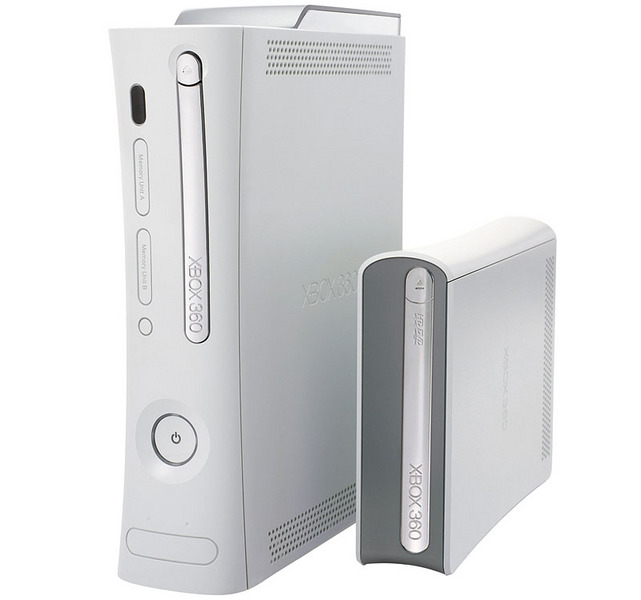
At $200 Xbox 360 HD DVD is a bargain

While the Sony PlayStation 3 may have an integrated Blu-ray player, Microsoft is doing its best to blunt that possible competitive advantage with a next-generation DVD player of its own for the Xbox 360.

Dubbed simply Xbox 360 HD DVD player, the fairly basic external drive connects to the Xbox 360 via a USB cable. You can either stand the drive upright or lay it down horizontally. Whichever way you go, the whole outboard concept is a little kludgey, but the drive's $200 price tag is quite reasonable considering today's stand-alone HD DVD players start at $500.

Better yet, Microsoft is also throwing in an Xbox 360 Universal Media Remote and, for a limited time, a copy of Peter Jackson's King Kong HD DVD.

The Xbox 360 HD DVD player offers most of the features we expect from stand-alone HD DVD players, such as bookmarking and a zoom function. The 360's current component video and VGA adapters both have an optical digital output as their highest-quality audio jack, which can carry only standard DVD-level Dolby Digital and DTS surround sound.

The good news: Dolby Digital is the base soundtrack on all HD DVD movies, so you should always get a solid surround soundtrack instead of dead air.

Apart from its connectivity drawbacks, the Xbox 360 HD DVD player makes a perfectly suitable means of watching HD DVDs, and it's a good way for Xbox 360 owners get in on the next-generation DVD action without investing too much. Of course, adding $200 to the cost of the Xbox 360 puts the total cost of the console at the same price as the PlayStation 3 and its integrated Blu-ray drive.

Apples to apples, if next-generation DVD is what you're looking, the PS3 is going to be the better overall solution from a design standpoint. But for die-hard Xbox 360 fans, the PS3 just isn't an option.

On the Ending Note : Microsoft didn't market the Xbox 360 HD DVD player to work with PCs, nor does it officially support PC connectivity, but there are reports on the Web that you can indeed hack the player to work with a PC. However, on top of a set of Windows drivers, you'll also need a copy of DVD playback software, such as WinDVD8, that supports playback of HD DVD discs.

You can get one here

Also read the full review from CNET


Thursday, December 14, 2006

Seagate CEO: We help people watch porn

You think tech execs are boring? Check out a freewheeling interview with Seagate's Bill Watkins, who might be Silicon Valley's most outspoken CEO.

When Seagate CEO Bill Watkins spoke to Fortune senior editor Jeffrey M. O'Brien last week, he showed an openness usually reserved for cynical media commentators and reviewers. Over a dinner in San Francisco the outspoken Texan told the reporter about Seagate’s ultimate goal.

"Let's face it; we're not changing the world. We're building a product that helps people buy more crap - and watch porn."

Watkins goes on to comment on a range of issues, from his own board members to the HP scandal, the Blu-Ray vs. HD-DVD war and about saying no to meetings to watch his beloved football team.

When asked about the recent scandal involving HP, and if anyone has taken notice, he says: "Wall Street certainly didn't. I saw it and thought, it's good to know there's a board of directors more dysfunctional than mine."

So, I will say thank you Mr Watkins, for showing us that some CEO’s are still living, breathing people.

You can read the whole story here

Tuesday, December 12, 2006

MS boss prefers a Mac

No, No .. its not what you are thinking ... I am not talking about Bill Gates, this is about Jim Alchin, the man who has just brought you Windows Vista has told his boss Stever Balmer that if he had his way he would buy an Apple Mac.


"I would buy a Mac today if I was not working at Microsoft."

That was the very unexpected declaration made by Windows chief Jim Allchin in a January 2004 e-mail to Steve Ballmer and Bill Gates. The previously undisclosed e-mail was introduced as evidence last week in Microsoft's antitrust trial in the USA. Now, in a blog post responding to the coverage, Allchin cautions against taking the statement out of context and writes that he "was being purposefully dramatic" to make a case for a major overhaul of the Windows development process. In the 2004 e-mail, Allchin wrote that he saw "lots of random features and some great vision," but he warned that the Windows teams had lost their way.

Allchin says in his explanatory post that the company made the necessary changes. And he takes the opportunity to make a pitch for the result, Windows Vista, describing it as "far, far better than any other software available today."

Presumably that means the Seattle-area Apple Stores shouldn't be looking for a surprise customer anytime soon. Nevertheless, Steve Jobs suddenly has an eye-catching quote to add to his slides for next month's Macworld keynote.

Apple's iPhone ... Can it fail ??


There are a million reasons why the worst kept secret in the world, Apple’s upcoming iPhone, will succeed. Unfortunately for the Cupertino company there are even more reasons why it will not.

When Apple first introduced its iPod range of mp3 players it solved a big problem for consumers; space. The music players had up to that point been severely lacking in storage capability and the public knew it.

Enter Steve Jobs with his funky glasses, bean bags in the office and beautiful design. The iPods took the world by storm, and has no doubt been the catalyst to Apple’s other successful products. Ultimately, however, Apple is not a phone company. The last ‘revolutionary’ product that came out of the hipsters was the Mac mini, which largely flopped.

The mobile phone market is extremely competitive, and newcomers normally don’t do too well. Not only do the manufacturers have to compete on technology and performance, but getting in on lucrative deals with the carriers as well.

Apple also has to take into consideration the frequency that people trade in their cell phones. Unlike a high end mp3 player, mobile phones can be traded in as often as twice or three times a year, according to trends and emerging technology. Apple can not afford to jump on an already frantic race to always be first to market as well as being competitive on price. Ultimately, end users will be very interested to see Apple’s offering, but the hype will die off eventually.

I am sure the good people at Apple are aware of these concerns. At times they have proven to be equally brilliant at creating a profitable business model, as at creating eye-catching products. What future holds for Apple, we can only wait and watch.

Sunday, December 10, 2006

Apple to Take on Xbox, Wii, PS3 ?

Wall Street analyst says Apple hiring game developers.

The latest Apple rumor has the computer maker entering the gaming console, taking on Microsoft, Sony, and Nintendo.

In a note to clients published Monday, Prudential Equity Analyst Jesse Tortora said his checks show the Cupertino, California computer maker is hiring video game designers. The hires could indicate a move into either the gaming console market or that Apple could add fresh gaming capabilities to its existing line of iPod music players.

If Apple attacks the gaming console market, it would put the company up against some various serious competition. However, such a move might be needed to keep Sony and Microsoft from dominating the digital living rooms.

Both Sony and Microsoft are relying on their consoles to push new technologies into the living room, posing a serious threat to Apple’s own digital lifestyle aspirations. Apple has been edging into the living room building the ability to download feature films into its popular iTunes digital media store and announcing plans to introduce a set top box, code named iTV, that will allow users to more easily move downloaded films to their televisions.

Ultimately, we think Apple’s decision to enter the video game market could depend on its need to defend its position against the competition in the battle over the digital home.

Apple has dabbled in the console market before. The Pippin (see below), a set top multimedia player and game console designed by Apple and licensed by Bandai was a flop in the early 1990s. In May of 2006 it was named by PC World as one of the 25 worst tech products of all time.


There are two possibilities for Apple. A handheld device would allow Apple to easily build on the success of its iPod music players, which already play a wide array of games. A game console, however, could build on Apple’s efforts its MacMini computer and its plans for the iTV set top box.

Saturday, December 09, 2006

IE beware , here comes the 3rd Fox

Mozilla fans still starry-eyed from the recent release of Firefox 2.0 can already get a glimpse at what the next version of the browser will look like, as an alpha version of Firefox 3.0 has recently been uploaded to Mozilla's public FTP server.

Mozilla today hit an early milestone on the road to the next version of its open-source browser, but the final product is still a year away, developers say.
The Mozilla team released its first alpha release of Firefox 3.0 today, giving Firefox and Web application developers an early look at the next-generation browser. This release is not intended for regular users, not even those who like to play around with early versions of a product, Mozilla said.

The software, code-named Gran Paradiso, comes just six weeks after Mozilla shipped version 2.0 of the browser, but it has already been more than a year in development, according to Mike Schroepfer, Mozilla's vice president of engineering.

3.0 Features

The final version of Firefox 3.0 is expected to be released by the end of 2007. Developers hope that it will be a major step toward making Web applications indistinguishable from programs that are installed on the desktop, Schroepfer said.

Gran Paradiso features better support for a number of graphics standards, such as the Scalable Vector Graphics (SVG) language and the Canvas specification, Schroepfer said. "These are fairly major architectural changes to enable us to improve performance."

Firefox 3.0 also supports the Cairo graphics library, which aims to make Web pages look the same whether they are being printed or viewed on a Windows PC, a Macintosh, or a small-screen device.

The Firefox 3.0 plan calls for browsing, bookmarking, and privacy enhancements to be built into the browser, but Schroepfer said there is still a lot of time to work out new features. "It's a bit early to be talking about the user-facing features," he said.

Friday, December 08, 2006

Internet gangs hire students for cybercrime

Reuters report that organized gangs have adopted "KGB-style" tactics to hire high-flying computer students to commit Internet crime.

Criminals are targeting universities, computer clubs and online forums to find undergraduates, according to Internet security firm McAfee.

McAfee said the students write computer viruses, commit identity theft and launder money in a multi-billion dollar industry. The gangs' tactics echo the way Russian agents sought out experts at trade conferences or universities during the Cold War. Although organized criminals may have less of the expertise and access needed to commit cybercrimes, they have the funds to buy the necessary people to do it for them.

McAfee said its study was based partly on FBI and European intelligence. In Eastern Europe, some people are lured into "cybercrime" because of high unemployment and low wages.

"Many of these cybercriminals see the Internet as a job opportunity," McAfee quoted FBI Internet security expert Dave Thomas as saying. "With low employment, they can use their technical skills to feed their family."

Hackers are paid to write computer viruses that can infect millions of machines to discover confidential information or send unwanted "spam" emails. This "spyware" can detect credit card numbers or other personal information which is then used by fraudsters. Criminals trawl through social networking Web sites which allow people to leave their pictures and personal details.

Their research helps them to target "phishing" attacks, where people are sent fraudulent emails to trick them into revealing credit card numbers. Hackers are increasingly hired to spy on businesses, McAfee said. "Corporate espionage is big business," it added.

( Read the full story here )

Wednesday, December 06, 2006

And they said : Zune will fail ....

The music device can't go up sale-for-sale against industry leader iPod, but it's holding its own


With its Zune digital music player, Microsoft is showing just how powerful its marketing clout is. On Dec. 6, the company disclosed that it's on track to sell more than 1 million Zunes by June 30, the end of its fiscal year. Zune is establishing critical mass. "It's totally in line with our expectations," says Bryan Lee, vice-president of entertainment business at Microsoft.

The projection comes in the wake of sales data from market research firm NPD that shows Zune sliding from second to fifth place among digital music players in the week ended Nov. 25, its second week in stores. But Microsoft says that data includes cheaper players with less storage capacity, not the market it's targeting with Zune.

"The De Facto Challenger"

Lee says Zune isn't positioned to go for the high-volume segment of the digital player market that the flash memory-based players are shooting for. Instead, Microsoft is focusing on the higher end of the business for hard disk-based players.

Zune is the latest effort by Microsoft to find new growth. The company is gambling that it will build an iPod-like business over several years and hopes to eventually cut into the market leader's hegemony with such features as the ability for Zunesters to share music wirelessly with each other.

Making the Numbers

"We wanted to get out and be relevant in the space," Microsoft's Lee says. That grounding will give the company the foundation on which to build its Zune business. "We're pretty fast learners," Lee says.

If Microsoft hits its sales forecast, it would translate into $250 million in sales. That would put Zune sales in its first seven months alone on par with what Goldman Sachs analyst Rick Sherlund estimates will come from annual sales of Microsoft's mobile phone software. And that would be sweet music indeed for Microsoft.

( Read the full article from Businessweek )

Tuesday, December 05, 2006

MySpace say's : Bye Pedophiles

MySpace to Purge Sex Offenders

MySpace announced today it will begin searching its 100 million-plus user list for people listed in a national database of sex offenders.

Why didn't I think of that!

Just kidding, one can run a perl script to screen-scrape the Department of Justice's National Sex Offender Registry and run all the names and ZIP codes through MySpace's search engine.

Now MySpace is going to do its own searching, in partnership with a background-check company called Sentinel Tech Holding Corp.

From the press release:
"We are committed to keeping sex offenders off MySpace," said MySpace's Chief Security Officer, Hemanshu Nigam. "Sentinel Safe will allow us to aggregate all publicly available sex offender databases into a real-time searchable form, making it easy to cross-reference and remove known registered sex offenders from the MySpace community. The creation of this first-of-its-kind real-time searchable database technology is a significant step to keep our members as safe as possible."

The whole first-of-its-kind, never-been-done-before, thank-God-the-technology-finally-exists thread runs throughout the press release. The language seems calculated to let MySpace escape responsibility for failing to police the sex offenders on its site prior to October, despite the availability of a free online registry demonstrably useful for exactly that purpose.

That said, Sentinel's database promises to be far more powerful than the DOJ registry. As described, it'll contain detailed information, including height, weight, eye and hair color, and the complete offense history of each offender -- all completely searchable. It'll be like a Google for sex offenders.

That leaves just one real disappointment in this announcement: How MySpace plans to use the data. With all that information at its disposal, and a "24-hour-a-day dedicated staff" using it, MySpace could seriously enhance its policing. Instead, the company is taking a sophisticated database and wielding it as a blunt instrument, simply banning everyone on the list from registering or keeping a MySpace account, regardless of who they are or what they did.

This is bad because, obviously, banning sex offenders won't keep them off MySpace: it'll just give them a reason to lie about their name or location, even if they aren't up to no good. Now sex offenders who want to stay on MySpace will all be using false information from the start.

MySpace is essentially refusing an opportunity to detect and imprison active repeat offenders, by moving the entire superset of ex-offenders into the shadows. Does the convicted pedophile have lots of teenagers on his friendslist? MySpace won't know, because he'll be under same veil of anonymity as the flashers and peeping toms.

We know there are some ex-sex offenders who attempt to recidivate from accounts opened under their real names. If you believe they will now stay off MySpace, then the company's policy is good for safety. But if you think they'll simply start spelling their name a little different or lying about their ZIP code, then MySpace has lost the chance to take them off the streets.

MySpace is taking the easy way out. It may be good PR to be able to say that you don't allow past sex offenders of any stripe on your website, but the company should keep its eye on the ball: the goal isn't to keep a former flasher from blogging about his cat, it's to keep current pedophiles from pursuing children. MySpace could tell the difference, if it wanted to. A smart policing effort would use the sex offender database as one of many data points in keeping the site safe. Sometimes zero-tolerance is really tolerance.

(Read the news at The New York Times )

Got a camera ? Start clicking ...because Yahoo will pay for it.

I read an interesting article this morning in the New York Times about a joint effort on behalf of Reuters and Yahoo! to attempt to monetize Yahoo!'s large and constantly updated collection of user photos.


"Starting tomorrow, the photos and videos submitted will be placed throughout Reuters.com and Yahoo News, the most popular news Web site in the United States, according to comScore MediaMetrix. Reuters said that it would also start to distribute some of the submissions next year to the thousands of print, online and broadcast media outlets that subscribe to its news service. Reuters said it hoped to develop a service devoted entirely to user-submitted photographs and video."

Which is very interesting and something that probably should happen.

A couple of thoughts though.

First off is that a news agency's reputation is *everything*. This is a bold step on the part of Reuters. Even with experienced editors reviewing the images there certainly can be fraudulent photos submitted.

If you are a blog, or digg, or some other kind of user generated content service, people to a certain degree (or at least should to a certain degree) take what gets published with a grain of salt. After all anyone can write a blog and anyone can submit to digg. Certainly over time some bloggers build up reputations that can be as solid as a news agency, but in the end it's the news agencies out there that have the most to lose when bad news gets out there.

"This is an imperfect process. Last summer, a blogger discovered that photos of the conflict in Lebanon by a freelance photographer working for Reuters had been digitally altered. Reuters stopped using the photographer and withdrew his work from its archive. The company is now trying to develop software that will help detect altered photographs."

So it's a big step for Reuters to make the jump from hiring known photographers (who can still cheat) to letting anyone in the world submit photos. I think this is good, I'm just surprised to see it under their name. I would have thought that even if they wanted to get into the user generated photo news business that they would create some kind of a subsidiary with all kinds of let the viewer beware labels or something.

It will be interesting to see how people respond the first time someone gets a doctored photo published as news on Reuters. Who knows, maybe nobody will care.

The thing with news though is that it breaks fast. We say this with the London bombings when photos of the bombings broke on Flickr before the major news outlets. And sometimes when it breaks fast you don't have the time to do the due diligence with a photo. I wonder who will be the first person to get a goatse or a hidden image of Howard Stern in the background of a photo picked up by them.

So I think this is an interesting and bold idea by Reuters and Yahoo is probably the perfect company to match with this.

But here's what I don't like:

"Users will not be paid for images displayed on the Yahoo and Reuters sites. But people whose photos or videos are selected for distribution to Reuters clients will receive a payment. Mr. Ahearn said the company had not yet figured out how to structure those payments."

So let's see, I'm going to go out, capture news, create something of value, it's going to be used by two for profit companies who will theoretically be making money off of me, and I get? Nothing. Or maybe something when they get around to figuring it out.

First off, if I'm an editorial photographer shooting for Reuters I'm going to be pissed. So now instead of using assigned freelance photos, Reuters can now just go to Flickr and get one for free? Ouch. The cost of images really is coming down. Second, you are going to miss out on the best of the non-Reuter's freelance work out there because they are not going to bother submitting it to a site that doesn't pay them a fair price for their images.

Yahoo! and Reuters should have an established pay schedule by which they will compensate photographers. Something like, "we'll pay $250 minimum for every photo distributed in areas outside our online service," would have been nice to see in the article.

If you need a camera you can get it from here

(Read the full story from The New York Times)


Monday, December 04, 2006

Podcasting is Rolling on and on and on .....

If all you are looking to do is find a soapbox from which to speak your piece, chances are, after you've made your point, your podcasting career will come to a swift end. Too often have I seen this happen. At first, the idea of podcasting is new, fresh and exciting to people. They start out making a new podcast every day.


Now that a respectable duration of time has passed, podcasting shows no signs of slowing down.

People everywhere are creating new podcasts. Some of the more popular ones boast a loyal following of millions around the globe. And just like in any creative venue, you will find the good, the bad and everything else in between. For the most part, all you really need to create a podcast is a computer, Internet Free How-To Guide for Small Business Web Strategies - from domain name selection to site promotion.

As with anything, a little bit of research will turn up a wide variety of products ranging from the bare-bones basics to a complete, professional recording setup. Prices will obviously reflect the quality setup you select so be careful in your choices.

Deciding What to Say
One of the most important things you need to consider before plunging into the podcasting pool is what you have to say and how long it will take for you to say it.

If all you are looking to do is find a soapbox from which to speak your piece, chances are, after you've made your point, your podcasting career will come to a swift end. Too often have I seen this happen. At first, the idea of podcasting is new, fresh and exciting to people. They start out making a new podcast every day.

Then after they say what they have to say, their podcasts get updated every other day, then once a week, then maybe a couple of times a month, until the same podcasts remain unchanged for months, even years, only to be finally abandoned altogether as all interest fades into oblivion.

This usually happens because casual podcasters don't realize how demanding a podcast can be on one's time. So if yours is a limited quest, you may be better off creating one or a series of recordings, posting them on your Web site, and then leaving things at that.

A Plug for the iMic

On a related subject, just the other day I wanted to record something on my computer and discovered that the device I wanted to use did not connect via USB Latest News about USB. Instead, it had the more conventional mini-plug at the end of its cable.

Further exploration of my equipment drawer revealed several such devices, including microphones, telephone recorders, an AM/FM radio and even a cassette tape recorder/player. They all required input or output and the corresponding jack to make them work with my computer. I realized that if I ever wanted to use any of this older equipment, I needed something that could convert their analog outputs and inputs to digital ones, making it possible to physically connect them to my computer's USB port. That's exactly what the iMic from Griffin Technologies does.

Actually, the iMic has been around for years, but it recently got both a cosmetic and functional upgrade. The small, round, disk-shaped device sports "in" and "out" plugs to accommodate your mini-plug equipment. At its other end, the iMic has a USB cable that connects to either your Windows or Macintosh Latest News about Macintosh computer. If the device you're trying to connect is a microphone, for example, you just plug its mini-plug cable into the iMic's "in" plug.

Conversely, if you want to transfer audio out from your computer to your older cassette tape recorder, you connect a cable from the iMic's "out" plug to your cassette recorder's line-in jack. Depending on the sensitivity of the older device, the iMic offers a single switch that lets you select between line and microphone levels.

The iMic sells for US$39.99. Griffin also includes their "Final Vinyl" software that automatically senses and locates the iMic's USB connection, letting you just plug your older device in, connect the iMic to your PC, and start rockin' and rollin'. You can grab one of these here